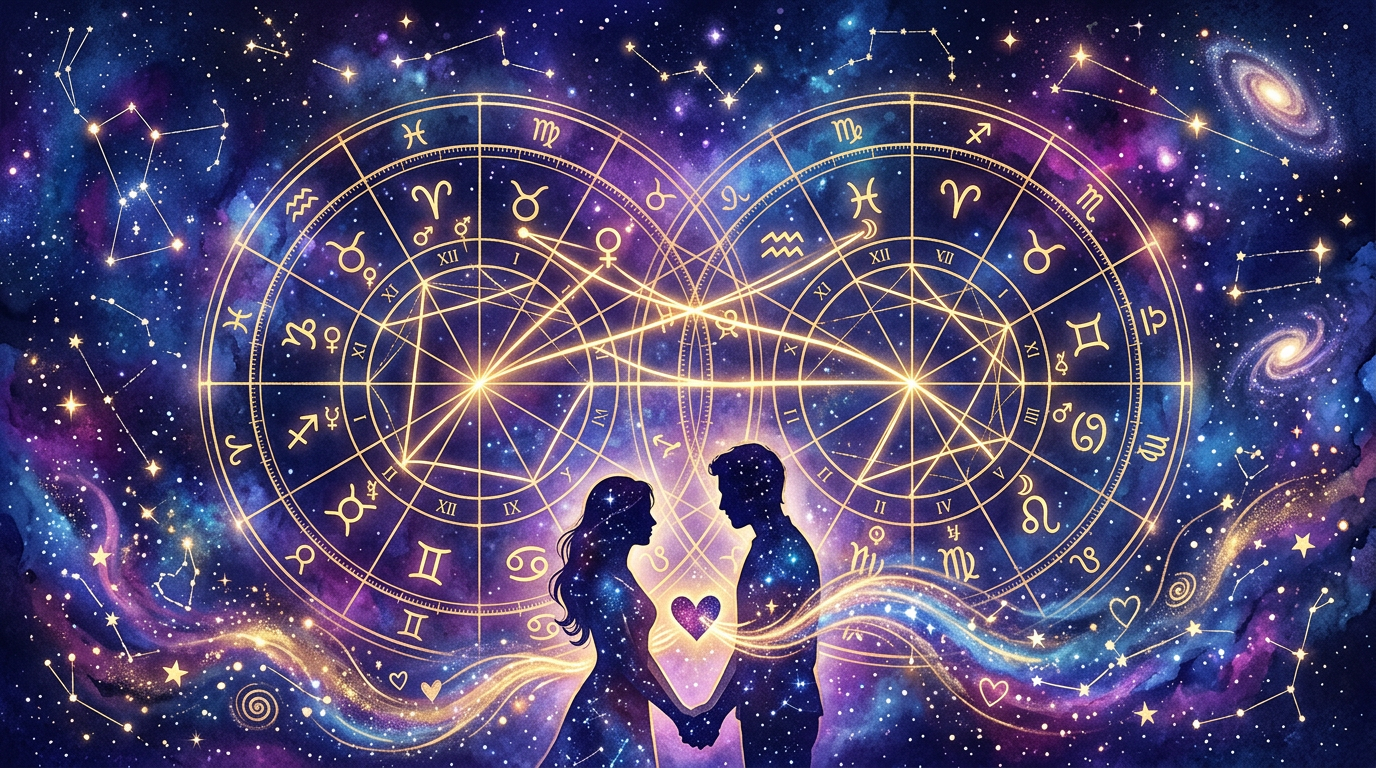
Synastry Chart: How to Read Relationship Compatibility in Astrology
March 14, 2026
NatalScope
A synastry chart is the most powerful tool in relationship astrology. It compares two birth charts side by side to reveal the dynamics between two people — the magnetic attraction, emotional bonds, potential conflicts, and long-term compatibility.
Synastry is a branch of astrology that studies relationships by overlaying two natal charts. Unlike a simple sun sign compatibility check, a synastry chart analyzes how every planet in one person's chart interacts with every planet in the other person's chart.
The result is a detailed map of your relationship dynamics — where the sparks fly, where you feel at home, and where tensions may arise.
A synastry chart keeps both charts separate and looks at the connections between them. A composite chart merges both charts into one, creating a single chart for the relationship itself. Both are valuable, but synastry shows how each person experiences the other.
To create an accurate synastry chart, you need the following for both partners:
The time of birth is especially important because it determines the house placements — which areas of life each person activates in the other.
Aspects are the angles between planets in the two charts. They are the core of synastry interpretation.
When one person's planet sits on top of the other's, the energy merges. Conjunctions are the most powerful aspects in synastry. Sun conjunct Sun creates a strong sense of identity and recognition. Venus conjunct Mars is one of the strongest indicators of physical attraction.
Trines create natural flow and ease. Moon trine Moon means emotional understanding comes effortlessly. Venus trine Jupiter brings joy, generosity, and shared optimism.
Squares generate friction, but also passion. Mars square Pluto can indicate power struggles, but also intense, transformative attraction. Squares keep relationships dynamic.
Oppositions create a "you have what I lack" dynamic. Sun opposite Moon is a classic soulmate indicator — a balance between identity and emotions.
Sextiles offer gentle, supportive energy. They indicate areas where cooperation comes easily, though the potential needs to be actively developed.
Not all aspects carry equal weight. Here are the ones professional astrologers look at first:
The classic attraction indicators. Venus conjunct Mars is raw physical and romantic chemistry — one person embodies desire (Mars), the other embodies beauty and love (Venus). The trine and sextile versions are smoother; the square and opposition add tension but also irresistible magnetism.
The Moon governs emotions and comfort. Moon conjunct Moon means you feel emotionally at home with each other. Moon conjunct Venus creates a sweet, nurturing bond. Moon square Mars can mean emotional triggers but also passionate intensity.
Sun conjunct Moon is one of the strongest soulmate aspects. The Sun person illuminates the Moon person's inner world, while the Moon person nurtures and supports the Sun person's identity.
Saturn in synastry shows where a relationship gets serious. Saturn conjunct Venus can feel restrictive but often indicates a committed, long-lasting bond. Saturn aspects determine whether a relationship has staying power or burns out quickly.
Beyond aspects, house overlays show which life areas each person activates in the other.
When someone's planets fall in your 1st house, they have a direct impact on your identity and self-image. There is an immediate, visceral awareness of each other.
The 5th house is romance, fun, and creativity. Planets here create a playful, joyful connection. This is the "dating and falling in love" house.
The 7th house is the house of partnership and marriage. Significant planet overlays here often indicate long-term relationship potential.
The 8th house governs intimacy, shared resources, and transformation. Planets here create deep, intense bonds — sometimes obsessive, always transformative. Mars in the 8th house synastry is one of the most intense placements for physical connection.
The 12th house is spiritual and karmic. Connections here can feel fated, as if you knew each other in a past life. Sun in the 12th house synastry often indicates a hidden or deeply spiritual bond.
Not every connection is healthy. Watch for these challenging patterns:
These aspects do not doom a relationship, but they require awareness and maturity from both partners.
Comparing zodiac signs gives you about 5% of the picture. A full synastry chart analysis considers:
To get the complete picture, you need both birth charts calculated with exact birth times.
What Is a Synastry Chart?
Synastry is a branch of astrology that studies relationships by overlaying two natal charts. Unlike a simple sun sign compatibility check, a synastry chart analyzes how every planet in one person's chart interacts with every planet in the other person's chart.
The result is a detailed map of your relationship dynamics — where the sparks fly, where you feel at home, and where tensions may arise.
Synastry vs. Composite Chart
A synastry chart keeps both charts separate and looks at the connections between them. A composite chart merges both charts into one, creating a single chart for the relationship itself. Both are valuable, but synastry shows how each person experiences the other.
How to Calculate Your Synastry Chart
To create an accurate synastry chart, you need the following for both partners:
- Date of birth
- Exact time of birth
- Place of birth
The time of birth is especially important because it determines the house placements — which areas of life each person activates in the other.
Calculate your synastry chart for free
Calculate Your Natal Chart FreeKey Aspects in Synastry
Aspects are the angles between planets in the two charts. They are the core of synastry interpretation.
Conjunctions (0°) — Fusion
When one person's planet sits on top of the other's, the energy merges. Conjunctions are the most powerful aspects in synastry. Sun conjunct Sun creates a strong sense of identity and recognition. Venus conjunct Mars is one of the strongest indicators of physical attraction.
Trines (120°) — Harmony
Trines create natural flow and ease. Moon trine Moon means emotional understanding comes effortlessly. Venus trine Jupiter brings joy, generosity, and shared optimism.
Squares (90°) — Tension and Growth
Squares generate friction, but also passion. Mars square Pluto can indicate power struggles, but also intense, transformative attraction. Squares keep relationships dynamic.
Oppositions (180°) — Magnetic Pull
Oppositions create a "you have what I lack" dynamic. Sun opposite Moon is a classic soulmate indicator — a balance between identity and emotions.
Sextiles (60°) — Opportunity
Sextiles offer gentle, supportive energy. They indicate areas where cooperation comes easily, though the potential needs to be actively developed.
Most Important Synastry Aspects for Love
Not all aspects carry equal weight. Here are the ones professional astrologers look at first:
Venus-Mars Aspects
The classic attraction indicators. Venus conjunct Mars is raw physical and romantic chemistry — one person embodies desire (Mars), the other embodies beauty and love (Venus). The trine and sextile versions are smoother; the square and opposition add tension but also irresistible magnetism.
Moon Aspects
The Moon governs emotions and comfort. Moon conjunct Moon means you feel emotionally at home with each other. Moon conjunct Venus creates a sweet, nurturing bond. Moon square Mars can mean emotional triggers but also passionate intensity.
Sun-Moon Aspects
Sun conjunct Moon is one of the strongest soulmate aspects. The Sun person illuminates the Moon person's inner world, while the Moon person nurtures and supports the Sun person's identity.
Saturn Aspects
Saturn in synastry shows where a relationship gets serious. Saturn conjunct Venus can feel restrictive but often indicates a committed, long-lasting bond. Saturn aspects determine whether a relationship has staying power or burns out quickly.
House Overlays in Synastry
Beyond aspects, house overlays show which life areas each person activates in the other.
1st House Overlay
When someone's planets fall in your 1st house, they have a direct impact on your identity and self-image. There is an immediate, visceral awareness of each other.
5th House Overlay
The 5th house is romance, fun, and creativity. Planets here create a playful, joyful connection. This is the "dating and falling in love" house.
7th House Overlay
The 7th house is the house of partnership and marriage. Significant planet overlays here often indicate long-term relationship potential.
8th House Overlay
The 8th house governs intimacy, shared resources, and transformation. Planets here create deep, intense bonds — sometimes obsessive, always transformative. Mars in the 8th house synastry is one of the most intense placements for physical connection.
12th House Overlay
The 12th house is spiritual and karmic. Connections here can feel fated, as if you knew each other in a past life. Sun in the 12th house synastry often indicates a hidden or deeply spiritual bond.
Red Flags in Synastry
Not every connection is healthy. Watch for these challenging patterns:
- Pluto square personal planets — potential for manipulation and control
- Mars square Mars — frequent arguments and clashing wills
- Saturn opposite Venus — feeling unloved or emotionally restricted
- Neptune conjunct personal planets — idealization, deception, or confusion about the relationship
These aspects do not doom a relationship, but they require awareness and maturity from both partners.
Beyond Sun Sign Compatibility
Comparing zodiac signs gives you about 5% of the picture. A full synastry chart analysis considers:
- All planetary aspects between both charts
- House overlays — where each person's planets land in the other's chart
- The rulers of the 7th house (partnership) in both charts
- Nodal connections — karmic ties through the North and South Nodes
[*]Vertex and anti-Vertex contacts — fated encounters
To get the complete picture, you need both birth charts calculated with exact birth times.
Calculate your free natal chart now
Calculate Your Natal Chart Free